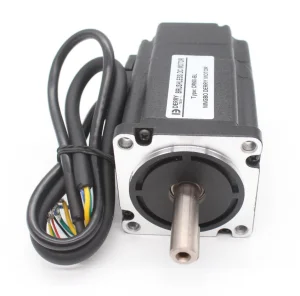
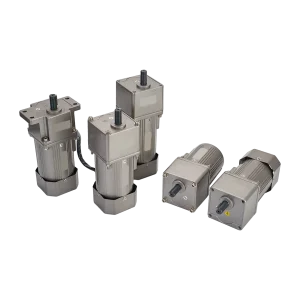
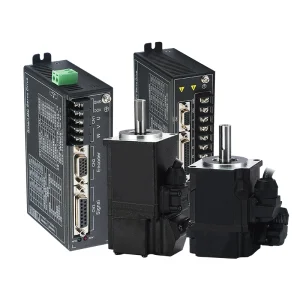
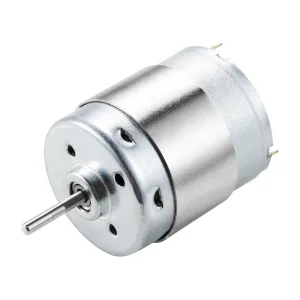
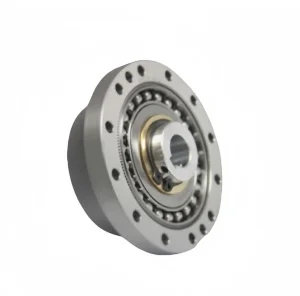
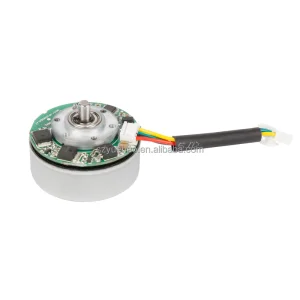
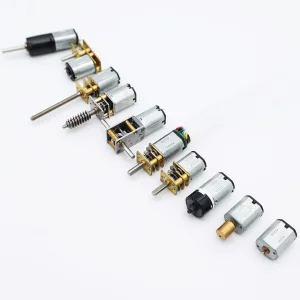
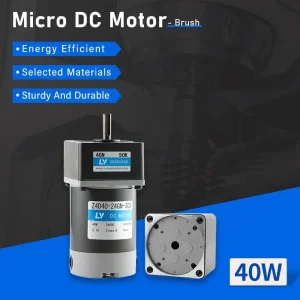
Explore our top micro-motion products engineered for maximum torque density, exact speed control, and robust durability.
Chengdu KPM Minimoto Co., Ltd. stands at the forefront of micro-motion technological innovation. We serve as a professional mini DC motor manufacturer specializing in custom micro-motors, precision gearboxes, and customized drive modules engineered for demanding industrial, commercial, and robotics environments. As an elite OEM/ODM engineering partner, KPM Minimoto integrates design, prototype testing, high-mix assembly, and automated quality assurance to supply high-reliability systems worldwide.
Headquartered in Chengdu, Sichuan, China, our company boasts a modern manufacturing facility covering over 7,500 square meters and staffed by a highly technical workforce of over 150 motor design engineers, quality technicians, and production specialists. Our core competency lies in modifying torque-speed profiles, rotor dimensions, shaft interfaces, and feedback encoders to match the architectural constraints of our clients' end assemblies.
How the escalation of automated, connected, and intelligent electromechanical assemblies drives the subminiature motor market.
Modern assembly pipelines rely heavily on low-voltage DC servo actuators and micro gear motors to operate localized pick-and-place robots, automated guided vehicles (AGVs), and smart valves. The need for decentralization means motors must fit within tight mechanical spaces while delivering up to 1000W of short-burst torque.
Surgical robotics, fluidic dosers, and handheld surgical instruments require extremely low vibration profiles, high thermal efficiency to prevent overheating adjacent to human tissue, and compatibility with sterilization protocols. Dynamic brush and coreless motors fulfill these stringent design mandates.
From modern smart locks to automated dome cameras, the market demands sub-20mm actuators that draw minimal quiescent current. Battery-powered smart locks, for example, leverage subminiature planetary gearboxes to generate high starting torque under constrained 3V or 6V configurations.
Across the globe, the supply chain for subminiature motors is experiencing a distinct technological shift. Design engineers are moving away from oversized, high-voltage brushed motors toward highly integrated, low-voltage, brushless, and coreless configurations. The reduction of overall mass directly correlates with lower power requirements and decreased inertial resistance, leading to highly responsive systems.
As a key partner in this transition, KPM Minimoto works closely with design agencies to optimize motor efficiency. Our design engineering team leverages advanced magnetic flux simulations (FEA) to maximize torque output while maintaining the minimal footprint demanded by space-constrained medical, aerospace, consumer, and automotive designs.
A detailed comparison of internal layouts, winding technologies, and performance optimization vectors.
Traditional miniature motors utilize an iron core wrapped with copper wire. While economical, this architecture suffers from cogging torque (magnetic latching between the rotor teeth and stator magnets) and eddy current losses. KPM Minimoto's hollow-cup coreless design replaces the heavy iron core with a self-supporting, basket-wound copper coil. This creates a lightweight rotor with low inertia, offering quick acceleration and smooth operation without cogging.
This layout is essential for high-performance applications like camera stabilization gimbals, hobby servos, and medical micro-pumps, where small changes in current must yield immediate adjustments in angular velocity.
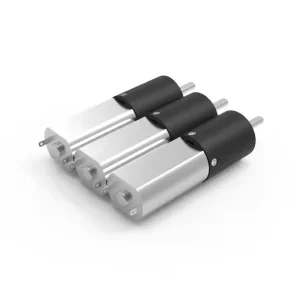
Subminiature motors naturally operate at high angular velocities (up to 34,000 RPM for coreless models). To adapt this speed for practical mechanisms like smart locks, the assembly must incorporate a gear reduction stage. KPM specializes in planetary gearbox engineering, deploying 12mm, 16mm, and larger gear trains built from precision-machined metals or engineering polymers.
Planetary arrangements distribute load across multiple gear points. This allows the system to withstand high torsional stresses in a compact layout, outperforming simple spur gear setups.
Uses electronic commutation instead of physical brushes. Features a longer operational life, low EMI noise, and superior thermal characteristics.
Features a self-supporting winding system with precious metal brushes. Offers low starting voltage, zero cogging, and fast response times.
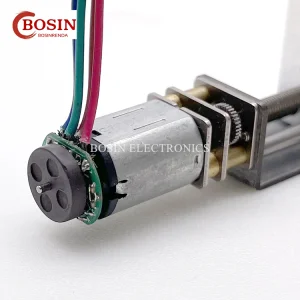
Combines a high-efficiency motor with closed-loop optical or magnetic encoders. Delivers high angular precision for robotic arms and AGV drive wheels.
Visual walkthrough of Chengdu KPM Minimoto Co., Ltd.'s modern facility, automated assembly lines, and testing infrastructure.
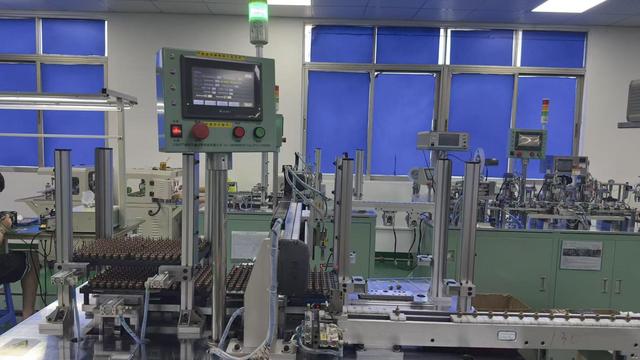
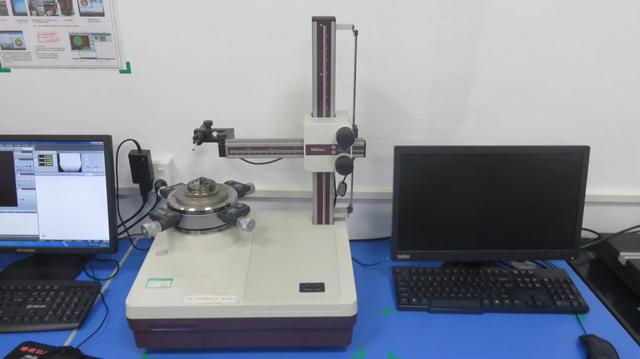
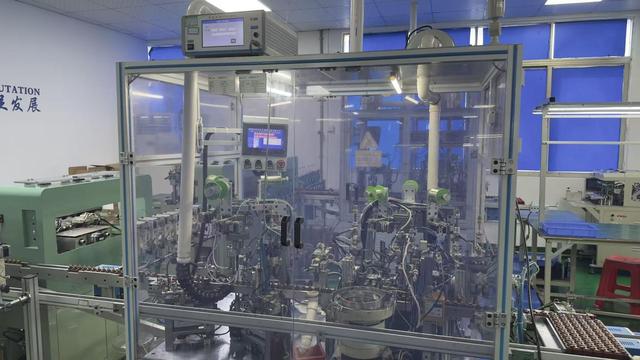
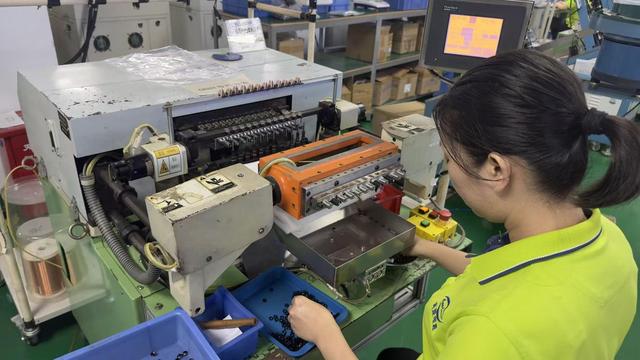
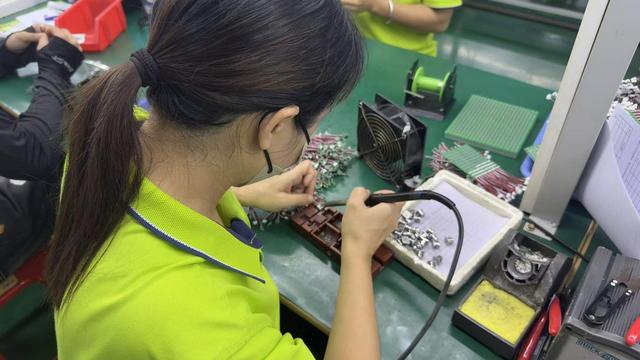
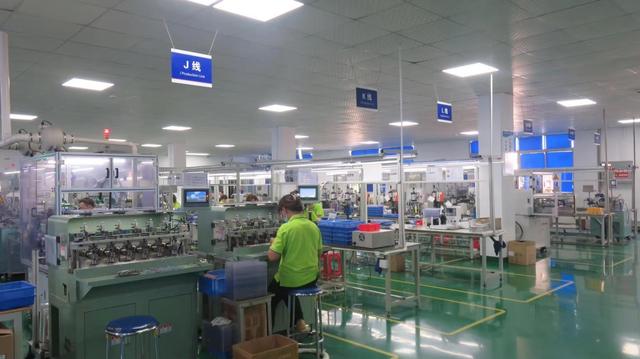
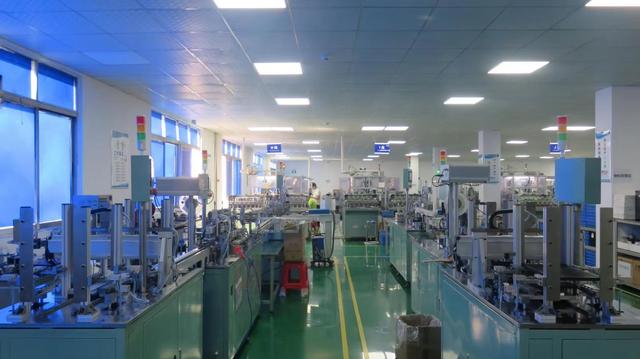
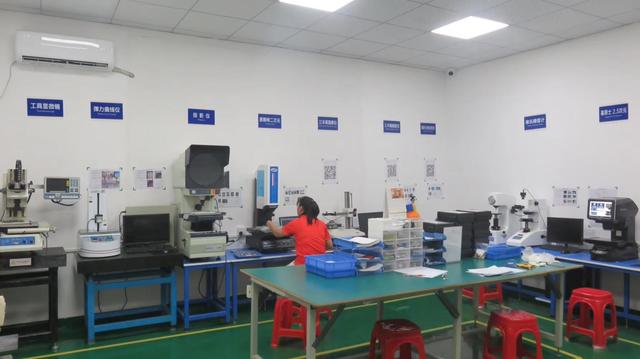
To ensure high performance and consistent quality across millions of motor units, KPM Minimoto utilizes automated assembly lines, high-resolution CNC machining centers, and multi-axis winding systems. Our quality assurance protocol tracks every raw component—from neodymium magnets and wire coils to precision gear teeth—through our quality control program.
Our verification workflow includes:
Meeting international engineering standards and offering robust localization support across global regions.
Navigating global regulatory landscapes requires adherence to recognized certification standards. KPM Minimoto guarantees that all OEM/ODM subminiature motor designs comply with the following environmental, mechanical, and electrical requirements:
We provide localized engineering support across North America, Europe, South America, and the Asia-Pacific region. By offering direct communication with our application engineers, KPM Minimoto streamlines the technical integration process. Our custom engineering support includes:
Strategic directions for subminiature motor engineering over the next decade.
Integrating local microcontroller units and sensor grids into the motor housing. This allows for real-time diagnostics, load prediction, and preventive maintenance warnings directly at the actuator level.
Utilizing proprietary high-coercivity Neodymium-Iron-Boron (NdFeB) magnetic compounds. These materials help prevent thermal demagnetization, allowing for higher torque densities in compact designs.
Optimizing automatic micro-winding architectures to manufacture high-yield brushless motors with outer diameters below 10mm. These micro-motors are designed for precision applications like endoscope optics and implantable medical pumps.
Direct answers to the most common questions raised by electromechanical design engineers and procurement officers.
Initial design specifications and 3D CAD modeling are completed within 3 to 5 business days. Once the engineering designs are approved, functional prototypes are manufactured and shipped within 15 to 25 days. Production lead times typically run from 30 to 45 days, depending on the design's complexity and order volume.
Coreless motors feature an ironless winding configuration. By eliminating the steel rotor core, they eliminate magnetic cogging, reduce weight, and lower internal inertia. This results in smoother rotation, reduced noise, and faster start-stop acceleration compared to traditional iron-core motors.
We integrate both optical and magnetic encoders into our motor assemblies. Depending on your system's resolution requirements, we can configure incremental or absolute encoders, offering feedback resolutions up to 4096 pulses per revolution (PPR) for closed-loop motion control.
Yes, we design custom configurations for specialized environments. We can implement ingress protection ratings up to IP67, utilize low-temperature synthetic lubricants, and apply protective coatings to winding coils to prevent corrosion from moisture, dust, and chemical exposure.
Explore our high-precision planetary, harmonic drive, and ultra-compact coreless motor configurations.
 KPM Minimoto