Choosing a small motor is rarely as simple as matching voltage and speed. A motor that fits inside a two-inch robot may still lack the torque needed to move its wheels. That is why understanding what is a mini DC motor matters before comparing products. These compact electric motors convert direct current into rotary motion. They commonly power toys, sensors, small pumps, robotic joints, camera mechanisms, and lightweight automated devices.
This guide examines the top 10 mini DC motors through practical specifications and real-world suitability. We consider operating voltage, no-load speed, torque, current draw, shaft size, mounting style, noise, and expected service life. A motor rated at 6 volts may behave differently under load, especially when a battery, gearbox, or narrow wire limits available current. Watch the heat. Excessive warmth can indicate poor efficiency, mechanical resistance, or an undersized power supply.
Some selections prioritize speed, while others favor controlled movement and stronger starting force. Geared motors usually rotate more slowly, but they can deliver greater torque at the shaft. Coreless and brushed designs may offer different responses, costs, and maintenance needs. There is no perfect choice.
Your application decides.
The rankings are intended as a useful starting point, not an absolute verdict. Manufacturer data can vary, and real performance depends on load, alignment, lubrication, and operating time. A careful buyer should verify datasheets and measure current under actual conditions. Even a promising motor may disappoint when the project demands more torque than its compact body can provide.
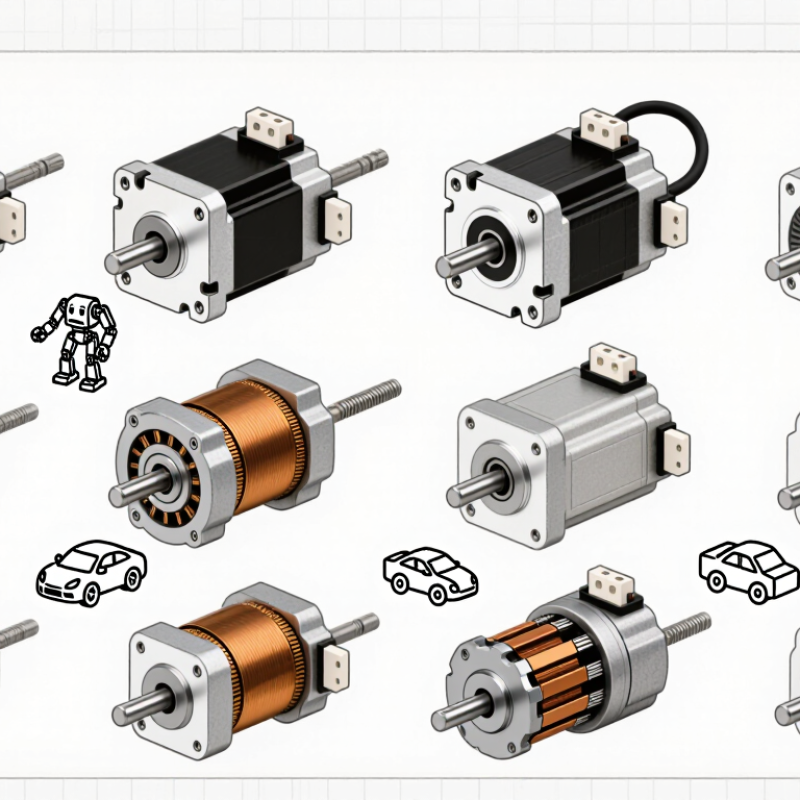
A mini DC motor is an electric machine that changes direct-current electricity into rotary motion. Its compact body may fit inside a small pump, toy mechanism, camera accessory, or handheld tool. Small, but useful.
Inside, permanent magnets create a magnetic field around a rotating armature. When current enters the armature windings, magnetic forces produce torque. A split-ring commutator and carbon brushes switch the current direction as the shaft turns. This switching keeps the torque moving forward instead of stopping after half a rotation.
Connect the motor to a suitable DC voltage, and the shaft begins turning. Increasing voltage usually raises speed, while mechanical load reduces speed and increases current draw. That relationship matters during design.
A stalled motor can heat quickly because it draws much more current than it uses while spinning freely. Use a driver, fuse, or current-limited supply when testing.
Speed and torque depend on winding design, magnet strength, friction, and the attached load. Engineers check rated voltage, no-load speed, stall current, and operating temperature before choosing a motor. In my experience, no-load testing can be misleading; a motor may sound healthy but fail under a small gear or fan. The explanation is simplified, too. Brush wear, electrical noise, and alignment can affect real performance, especially in tight enclosures.
A mini DC motor changes electrical energy into rotary motion through magnetic force. Permanent magnets create the stationary magnetic field. Copper rotor windings create torque when current flows. The commutator reverses current direction, keeping the shaft rotating. Its main parts include the stator, rotor, shaft, bearings, housing, and brushes.
Brushed motors use carbon brushes and a mechanical commutator. They offer simple control, quick starting, and low initial cost. Brushless motors use electronic switching and position sensing. They usually last longer and operate more quietly. However, their controller adds wiring and design complexity. That trade-off matters.
Choose a geared motor when you need higher torque and lower output speed. The gearbox can drive a small wheel, valve, or robotic joint. Metal gears usually handle heavier loads. Plastic gears are lighter and often quieter. Check backlash, gear material, mounting holes, and output-shaft play before selecting one.
Coreless motors have lightweight rotors and respond rapidly. They suit miniature actuators, camera mechanisms, and fast-response movements. Their small size does not guarantee strong performance. Friction, misalignment, and a weak battery can still reduce output. My early assumption was wrong there.
Record operating voltage, no-load RPM, stall current, torque, and shaft size. Also check the gearbox ratio, mounting dimensions, and rated operating time. A high RPM value does not prove strong loaded performance. A slower geared motor may provide steadier movement and better control. Datasheets help, but they are not always directly comparable.
Test every motor under identical conditions. Use a regulated power supply, tachometer, and current meter. Measure no-load current, loaded speed, startup behavior, and temperature. Record results with the same load and mounting method. Test it yourself.
Startup current can exceed running current several times. A weak battery or narrow wiring may prevent reliable starting. Stall torque shows how much load the motor can handle without turning. Friction and shaft misalignment can make real performance worse. A motor may look powerful on paper but struggle physically.
Run each motor for about ten minutes at its expected load. Record the case temperature and watch for speed reduction. Brushed motors may become warm during continuous operation. Repeated starts can heat the shaft and housing noticeably. I once ranked a lighter motor too highly because its specifications looked impressive.
A mini DC motor is a compact electromechanical device that converts direct current electrical energy into rotational motion. To understand what is a mini DC motor, it is helpful to examine its main components, including the stator, rotor, magnets, coils, commutator, and brushes. When current flows through the coils, magnetic forces interact with the motor’s magnetic field, causing the rotor to spin. Speed and direction can typically be adjusted by changing the voltage or reversing the current.
Mini DC motors are available in several forms, such as brushed, brushless, geared, and coreless designs, each offering different advantages in efficiency, control, durability, size, and torque. Comparing the top 10 mini DC motors requires evaluating operating voltage, speed, torque, power consumption, noise, dimensions, lifespan, and control requirements. The best choice depends on the application, available space, load, desired performance, and operating environment. Select a motor that provides reliable output while meeting the project’s electrical and mechanical requirements.

 KPM Minimoto