China’s custom motor industry serves equipment makers that need more than standard power ratings. A motor must fit the machine, its operating cycle, and the space around it. A packaging line may need steady torque at low speed, while a pump could face frequent starts and changing loads. Small mismatches can create heat, vibration, wasted energy, or unexpected maintenance.
So, how can custom motor solutions improve equipment performance? The answer often begins with careful engineering, not a larger motor. Designers can adjust winding specifications, shaft dimensions, enclosure protection, cooling methods, and control compatibility. These choices can help a motor respond more reliably to real operating conditions. For example, matching torque to a conveyor’s changing load may reduce strain on connected components. Better fit can also simplify installation and service access.
Details matter. A compact machine may have little room for airflow. A dusty workshop can call for stronger enclosure protection. These requirements should be checked against measured loads, duty cycles, ambient temperatures, and control systems. There is no universal configuration. Customization also does not guarantee lower energy use or longer service life; results depend on design quality, production consistency, and correct installation. That caveat is easy to overlook.
A useful evaluation compares the proposed motor with the existing setup. Review efficiency data, temperature limits, vibration readings, and maintenance records where available. Ask suppliers how they verify performance and whether prototypes can be tested under representative loads. In practice, specifications may change after the first trial. That is not necessarily failure. It can reveal an assumption that needs correction. This article explores how China custom motors can support equipment performance, what design factors deserve attention, and how buyers can assess claims with practical evidence.
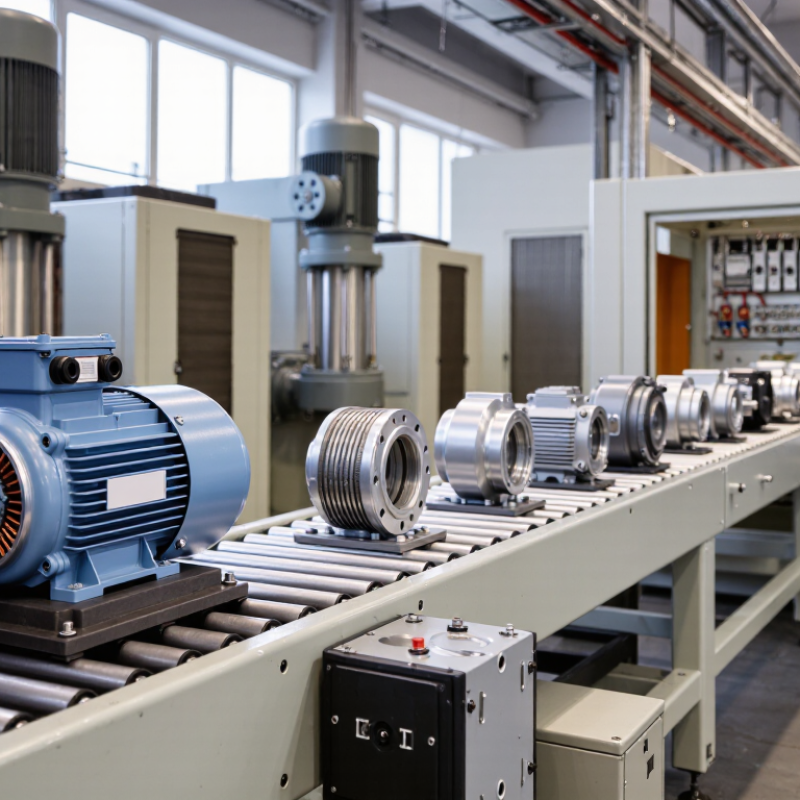
China custom motors are electric motors engineered for a specific machine, load, and working environment. Unlike standard catalog motors, they can match required torque, speed, voltage, shaft size, insulation, cooling, and mounting dimensions. A motor supplier may also adjust copper winding design, rotor balance, bearings, brakes, or encoder integration.
This matters because motor-driven systems consume significant energy. The International Energy Agency reports that electric motor systems use about 43–46% of global electricity, while industry accounts for roughly 69% of that demand. A correctly sized custom motor can reduce wasted torque, frequent overheating, and unnecessary starting current. For example, a conveyor operating eight hours daily may benefit from a low-speed, high-torque design instead of an oversized motor running below its efficient range.
Details decide performance. Engineers should review the duty cycle, ambient temperature, dust exposure, vibration, and actual load profile. A sealed enclosure may protect windings in a dusty workshop. Better balancing can reduce vibration at the drive end.
However, customization is not automatically efficient. Poor specifications can create higher costs, longer testing, or disappointing field results.
Testing should include temperature rise, insulation resistance, efficiency, noise, vibration, and load performance. IEC 60034 testing principles provide a useful technical reference. In practice, buyers should request test records, dimensional drawings, material details, and a clear tolerance sheet. Small omissions cause large problems. A shaft keyway, connector position, or brake response can affect the entire machine.
Provide torque, speed, acceleration, voltage, duty cycle, and operating hours. Record peak loads and startup shocks. Mounting space and shaft limits matter too.
A conveyor may need steady torque during long runs. A robotic joint may require rapid reversals and quick acceleration. These demands influence windings, rotor design, bearings, and cooling.
No. An oversized motor may waste energy and create installation problems. The best motor matches the real load, not an imaginary maximum. More power is not always better.
Designers match torque and speed to actual operating conditions. They measure efficiency across the full speed range. Rated-output data alone can hide poor performance elsewhere.
Record ambient temperature, dust levels, ventilation, and enclosure space. A sealed housing may suit a dusty workshop. Stronger insulation may help in hotter areas. Heat matters.
Test torque, current, temperature, noise, vibration, and startup behavior. Repeat tests under normal equipment conditions. No-load testing alone can give false confidence.
Restricted cooling paths can cause overheating inside a cabinet. Unexpected shaft loads or start-stop shocks may also appear. A clean spreadsheet cannot reveal every field problem.
Compare the prototype with actual load cycles and installation limits. Review drawings, tolerances, alignment, and power-supply capacity. The first design may be wrong. That is useful information.
China custom motors are electric motors tailored to the size, output, operating conditions, and control requirements of a particular machine. They can benefit equipment such as pumps, conveyors, fans, automated production systems, and devices with limited installation space or demanding duty cycles. Designing a motor for a specific application involves matching its power, speed, torque, mounting configuration, materials, and cooling method to the equipment’s needs.
How can custom motor solutions improve equipment performance? A well-matched motor can deliver more consistent output, use energy more efficiently, reduce unnecessary heat and vibration, and fit more smoothly into the overall system. These gains depend on careful selection and integration: engineers should consider the operating environment, load profile, available space, control method, maintenance needs, and compatibility with connected components. By addressing these factors early, equipment designers can improve reliability and achieve performance suited to the application.

 KPM Minimoto