2026 Top Guide How to Choose the Right Mini DC Motor?

Time:2026-10-19 Author:Aria
0%

Choosing a miniature motor looks simple until the first prototype stalls, overheats, or misses its position. The right decision begins with the application, not the product photograph. This guide explains how to choose the right mini DC motor for compact machines, robotics, medical instruments, toys, and automated mechanisms.

A practical evaluation starts with the load. Measure the required torque, speed, startup force, duty cycle, and available voltage. A motor turning freely on a workbench may fail when driving a small gearbox or lifting a real mechanism. Check the stall current carefully. Your power supply and motor driver must survive that brief but demanding condition. Also consider shaft diameter, mounting holes, noise, heat, brush wear, and environmental exposure. Tiny dimensions do not mean tiny consequences.

Dr. Ion Boldea, a respected electric-machines researcher, states, “The motor is the heart of an electric drive system.” That principle matters here. A motor, controller, gearbox, encoder, and power source must operate as one system. Datasheets provide useful boundaries, but they cannot predict every vibration, friction change, or assembly error. Testing matters.

Keep the test realistic.

Measure under load.

This guide will compare core specifications, explain common selection mistakes, and show how to match motor performance with actual operating demands. It will also question a tempting assumption: the smallest motor is not always the best motor. Sometimes, a slightly larger motor delivers better efficiency, longer service life, and more dependable control. That trade-off is easy to overlook, especially when space and budget dominate the design conversation.
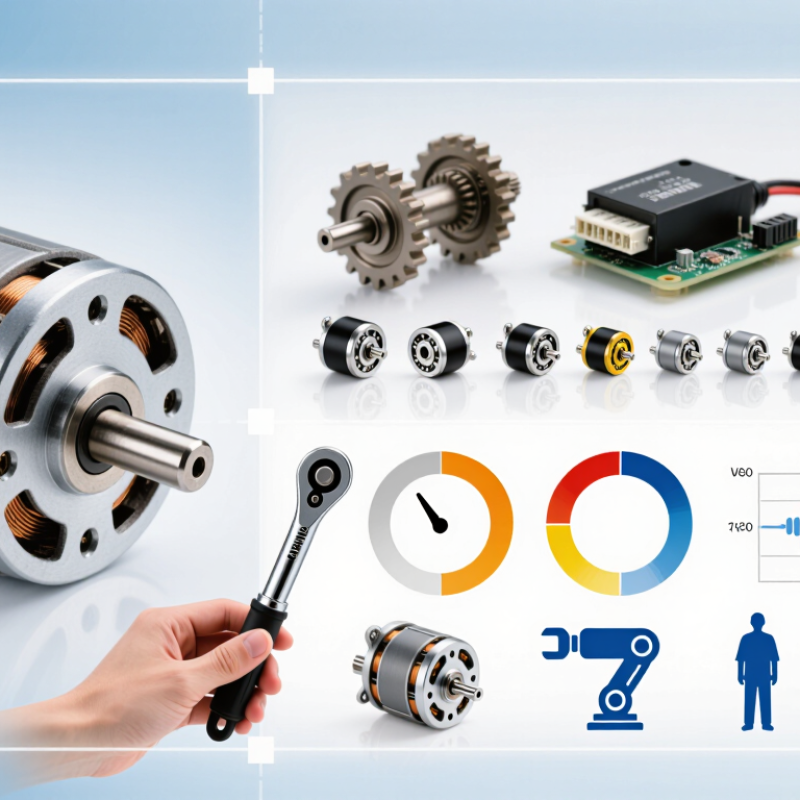
2026 Top Guide How to Choose the Right Mini DC Motor?

What Is a Mini DC Motor and How Does It Work?

A mini DC motor is a compact electromechanical device that converts direct current into rotary motion. It often contains a permanent magnet, a rotating armature, copper windings, a commutator, and carbon brushes. When current enters the windings, they create a magnetic field. This field interacts with the stator magnet and produces torque.

The commutator reverses current as the armature turns. This keeps the magnetic forces moving in the correct direction. The shaft then spins continuously. Simple in appearance. Not simple in behavior. Increasing voltage usually raises speed, while a heavier load demands more current. The motor also generates back electromotive force, which limits current during normal operation. At startup, current can rise sharply because the shaft has not begun turning.

A suitable motor depends on speed, torque, voltage, noise, space, and duty cycle. A small gearbox can provide more shaft torque, but it reduces output speed and adds mechanical loss. In practical testing, heat near the motor case often reveals an unsuitable load before failure occurs. I have found that no-load speed can be misleading; real mechanisms include friction, misalignment, and changing resistance. Check rated current, stall current, shaft size, and operating temperature in reliable technical data. A motor may fit perfectly yet perform poorly if these details are ignored.

Which Motor Specifications Match Your Application?

How to Choose the Right Mini DC Motor: Which Motor Specifications Match Your Application?

Choosing a mini DC motor starts with the machine’s real working conditions, not its size. Measure the required speed, torque, voltage, and available space. A motor rated at 12 volts may run well, yet still fail if its load demands excessive starting torque. Check the continuous torque, stall torque, and current draw separately. They describe different operating risks.

In practical testing, I first connect the motor to a controlled power supply and measure speed under the actual load. Then I check temperature after repeated cycles. A motor that performs well for ten seconds may overheat after ten minutes. Gear reduction can increase output torque, but it also adds noise, backlash, and mechanical loss. Confirm shaft diameter, mounting holes, rotation direction, and allowable duty cycle before ordering. Small details matter.

Tips: Leave a safety margin of 20–30% for torque when the load changes. Use the measured load, not an optimistic estimate. Check the driver’s continuous current rating and startup capacity. For battery systems, compare efficiency at the working speed, not only the no-load figure. I have occasionally selected motors by peak performance and regretted it. Real applications are less tidy than spreadsheets. Test early, record temperature, and question results that look unusually perfect.

How to Choose the Right Motor Size, Speed, and Torque

Choosing a mini DC motor starts with the load, not the motor label. Measure the required torque at the shaft, then add friction and acceleration torque. A practical safety margin is 20% to 30%. Too much margin can waste space, current, and money. Too little causes stalling.

Speed must match the real working cycle. Check rated speed under load, not the no-load figure printed in a catalog. For a small conveyor, gear mechanism, or valve actuator, calculate output speed after reduction. IEA’s 4E Motor Systems Annex reports that motor-driven systems consume roughly 46% of global electricity. Efficiency matters, even in compact equipment. A two-minute bench test is not enough. Heat changes performance.

Current is equally important. Confirm the motor’s running current, startup current, and stall current. Then select the driver, wiring, and power supply around those values. In practical testing, voltage drop can reduce torque before the motor appears faulty. My first estimate is often too optimistic. Measure it. Under load. Use a tachometer and a current meter when possible. Choose the smallest motor that meets torque and speed continuously, while keeping temperature within the manufacturer’s stated limit. A larger motor is not automatically safer. DOE motor-system guidance also emphasizes avoiding oversized motors, because poor loading can reduce efficiency and control quality.

How to Compare Power Sources, Controls, and Operating Conditions

2026 Top Guide: How to Choose the Right Mini DC Motor

Start with the power source, not the motor label. Battery voltage changes under load. That difference matters. A compact motor rated at 6 volts may stall when a battery falls below 5.5 volts. Check continuous current, startup current, and voltage tolerance with a meter. The International Energy Agency reports that motor-driven systems consume nearly half of global electricity, making efficient selection more than a small design detail. For battery products, compare energy density, discharge capability, recharge cycles, and protection circuitry. A regulated supply offers steadier speed, but it may hide poor mechanical sizing.

Control hardware should match the real load. Pulse-width modulation can adjust speed efficiently, while current limiting protects windings during jams. Add an encoder when position or repeatability matters. Without feedback, a motor may slow quietly as friction increases. The U.S. Department of Energy’s Motor Systems Market Assessment highlights sizing, controls, and operating conditions as key efficiency factors. Test the motor at its actual load, duty cycle, enclosure temperature, and airflow. A five-second laboratory test proves very little. Dust, tight bearings, and repeated starts can raise heat quickly. In bench work, the motor often looks perfect before installation. That is the part worth questioning. Choose a motor with thermal margin, but avoid excessive oversizing, which can waste space, current, and money.

How to Test, Install, and Maintain Your Selected Mini DC Motor

How to Choose the Right Mini DC Motor in 2026

A suitable mini DC motor should match the required voltage, speed, torque, and operating time. Check the technical datasheet carefully. Do not select by size alone. In my workshop, I test each motor with a regulated power supply and a multimeter. I record no-load speed, current draw, sound, and vibration. Keep the test brief. Never hold the shaft by hand during operation. A sudden stall can overheat the winding. Compare measured values with the manufacturer’s specifications. Small differences are normal, but large gaps need investigation.

Mounting accuracy affects service life. Secure the motor on a rigid bracket, then align the shaft with the driven part. Misalignment creates heat and a noticeable buzzing sound. Use a flexible coupling when minor movement is possible. Confirm polarity before connecting power. Begin with a lower voltage when practical. Watch the shaft for wobbling. It should run smoothly.

Maintenance is simple, but often neglected. Keep dust away from ventilation openings and inspect the wires for loose insulation. Check mounting screws after repeated vibration. Listen for new clicking, scraping, or speed changes. Lubrication depends on the motor design, so never add oil without reliable instructions. I once assumed a noisy motor needed lubricant; the real problem was a bent coupling. That mistake changed my inspection routine. Record running hours and temperature during regular checks. Replace the motor when wear, overheating, or unstable speed continues after correction. Reliability comes from measured testing, careful installation, and honest review of imperfect results.

FAQS

What is a mini DC motor?

A mini DC motor converts direct current into rotary motion. It usually contains magnets, copper windings, brushes, and a rotating armature. Small device. Real behavior can be complicated.

How does a mini DC motor create rotation?

Current flows through the windings and creates a magnetic field. This field interacts with the stator magnet and produces torque. The shaft then spins.

What does the commutator do?

The commutator reverses current as the armature turns. This keeps magnetic forces moving in the correct direction. Without it, rotation would not continue properly.

Does higher voltage always increase motor speed?

Higher voltage usually increases speed. However, load, friction, heat, and voltage drop can reduce actual performance. No-load speed can mislead.

How should I choose the correct motor torque?

Measure the required shaft torque, including friction and acceleration. Add a practical safety margin of about 20% to 30%. Too little margin may cause stalling.

Why is the catalog speed sometimes inaccurate?

Catalog speed may show no-load performance. Real mechanisms include friction, misalignment, and changing resistance. Check rated speed under the actual load.

What motor current values should I check?

Check running current, startup current, and stall current. These values guide the power supply, wiring, and driver selection. Startup current can rise sharply.

Can a gearbox improve motor performance?

A gearbox can increase shaft torque and reduce output speed. It also adds mechanical loss. Choose the reduction ratio for the real working cycle.

How can I detect an unsuitable motor load?

Watch the motor case temperature during a longer test. Excess heat may reveal excessive load or poor alignment. A two-minute test may be insufficient.

Is a larger motor automatically safer?

No. An oversized motor can waste space, current, and money. Poor loading may also reduce efficiency and control quality. My first estimate may be too optimistic. Measure under load.

Conclusion

Choosing the right mini DC motor begins with understanding how it converts electrical energy into mechanical rotation and how its internal design affects performance. The key is to match the motor’s voltage, current, rated speed, torque, power, and duty cycle with the application’s actual requirements. Consider the available installation space, load type, startup demands, and whether the motor must operate continuously or intermittently. These factors help determine the appropriate motor size, gear ratio, speed range, and torque capacity.

This guide explains how to choose the right mini DC motor by comparing power sources, control methods, environmental conditions, noise levels, and efficiency. It also highlights practical steps for testing the selected motor before installation, including checking rotation, temperature, current draw, and load behavior. Proper mounting, wiring, ventilation, and routine inspection can improve reliability and service life. By evaluating both technical specifications and real operating conditions, you can select a compact motor that delivers stable, efficient, and dependable performance.

Aria

Aria

Aria is a dedicated marketing professional with a deep passion for innovative strategies and a keen understanding of our company's product offerings. With a wealth of experience in the industry, Aria excels at crafting engaging content that highlights the unique features and benefits of our......