Miniature motors are easy to overlook. Yet they move a camera lens, vibrate a medical device, and position components inside factory equipment. Their small size does not make their engineering simple. Heat, noise, precision, battery life, and supply-chain reliability all matter—sometimes in a housing smaller than a coin.
The International Energy Agency’s 4E Electric Motor Systems Annex has estimated that motor-driven systems account for roughly 53% of global electricity consumption. That broad figure is not specific to miniature motors, but it highlights why efficiency matters even at small scales. Meanwhile, the IEA’s Global EV Outlook 2024 reported that electric-car sales approached 14 million in 2023, supporting demand for compact actuators, pumps, fans, and other motorized components. These reports describe wider trends, not a guaranteed forecast for every miniature-motor segment.
So, what is the future of miniature motor manufacturing? Research by Professor Z. Q. Zhu of the University of Sheffield has helped advance high-performance electric motor design. A careful takeaway from this field is simple: better performance must come with practical control of heat, materials, and manufacturing tolerances. That is a synthesis of the engineering challenge, not a verbatim quotation. The outlook is promising, but not effortless. For buyers comparing the 2026 best miniature motor manufacturers, this guide will examine the capabilities behind the claims: repeatable precision, application-specific design, dependable production, and evidence of real-world performance.
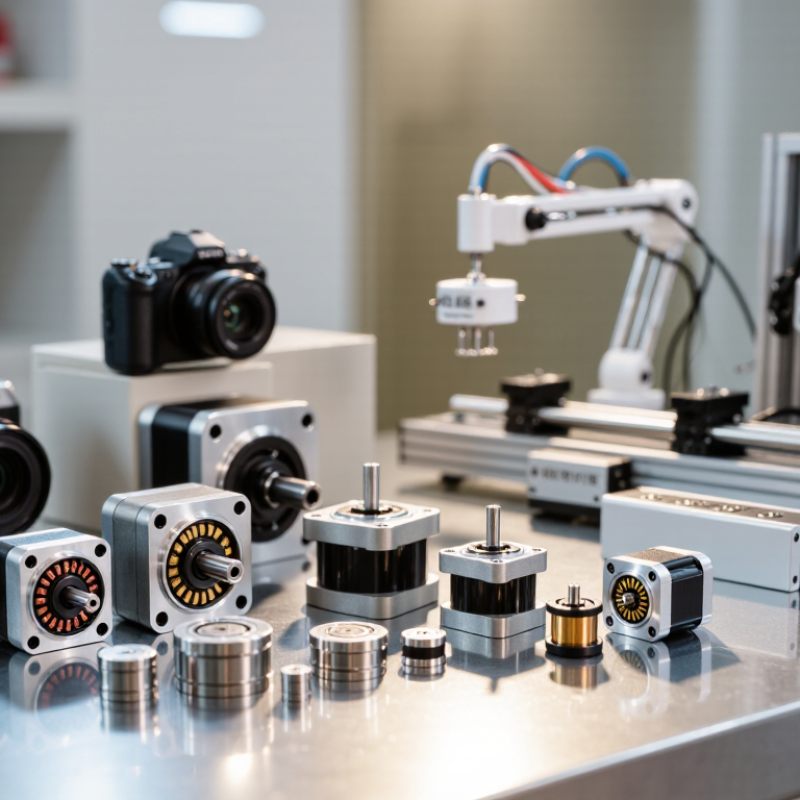
Miniature motors convert electrical energy into controlled mechanical motion inside compact products. Common types include brushed DC, brushless DC, stepper, and coreless motors. Brushed motors are simple and affordable, while brushless designs offer longer service life. Steppers provide accurate positioning. Coreless motors respond quickly, but they can require careful thermal control.
A miniature motor usually contains a rotor, stator, magnets, bearings, windings, and a commutator or electronic controller. Shaft alignment matters. A slight imbalance can create noise, vibration, and premature wear. In medical instruments, camera modules, pumps, valves, and laboratory equipment, engineers often balance torque, speed, size, and energy use. From practical testing, load conditions matter more than catalog ratings. A motor may perform well on a bench, then struggle inside a warm, enclosed device. Even experienced teams sometimes underestimate heat.
Tips: Define the operating load before choosing a motor. Check stall current, duty cycle, noise, vibration, and expected service life. Ask manufacturers for test data under realistic conditions, not only ideal results. Confirm shaft dimensions and mounting tolerances early. Small errors become expensive later. Future designs may use smarter controllers and improved magnetic materials, but basic engineering checks remain essential. There is no perfect motor. Each choice involves compromise.
Common types include brushed DC, brushless DC, stepper, and coreless motors. Brushed designs are simple and affordable. Brushless motors usually last longer. Steppers support accurate positioning. Coreless motors respond quickly but may need careful heat control.
Typical parts include a rotor, stator, magnets, windings, bearings, and a shaft. Some motors use a commutator. Others use an electronic controller. Each part affects motion, noise, heat, and service life.
Compare torque under real load, not only no-load speed. A motor reaching 20,000 revolutions per minute may produce weak force. Larger motors often deliver more torque but require extra space. Size is a constraint, not a performance guarantee.
Define the operating load and duty cycle. Check stall current, rated voltage, temperature rise, noise, vibration, and service life. Confirm shaft dimensions and mounting tolerances early. Small errors become expensive later.
A gearbox can increase output torque and reduce speed. It may also add backlash, friction, and extra heat. Check gearbox efficiency during repeated cycles. Ideal specifications may not match actual performance.
Enclosed products can trap heat around the motor. High temperature may reduce performance and shorten service life. A motor can pass bench testing, then struggle inside a warm housing. Heat changes everything.
Winding tension, rotor balance, shaft alignment, and air-gap size strongly affect consistency. Copper windings support electrical efficiency. Steel laminations help limit magnetic losses. Tiny bearings influence friction, noise, and heat.
Practical checks include electrical testing, vibration measurement, temperature monitoring, and repeated start-stop cycles. Material batches and inspection records support traceability. No test predicts every field condition. That limitation deserves attention.
Combine laboratory data, application testing, and documented quality controls. Ask for results under realistic loads and temperatures. Check performance inside the intended device. Our first estimate may be wrong. Reflection improves selection.
Miniature motors power a wide range of compact devices, from precision instruments and medical equipment to robotics and automated systems. Their performance depends on how manufacturers balance torque, speed, size, and energy use, while carefully selecting materials and controlling manufacturing tolerances. Understanding motor types, core components, and intended applications helps buyers identify designs suited to specific operating demands. IEC 60034-30-1 is also relevant, though its 0.12 kW lower limit means that many smaller motors fall outside its efficiency classification scope.
What is the future of miniature motor manufacturing? It will be shaped by electrification, greater automation, and smarter design. Manufacturers will focus on making motors smaller, more efficient, reliable, and easier to integrate with control systems. Advances in precision production and quality management can support these goals, while application-led engineering will remain essential for balancing performance, durability, and cost.

 KPM Minimoto